

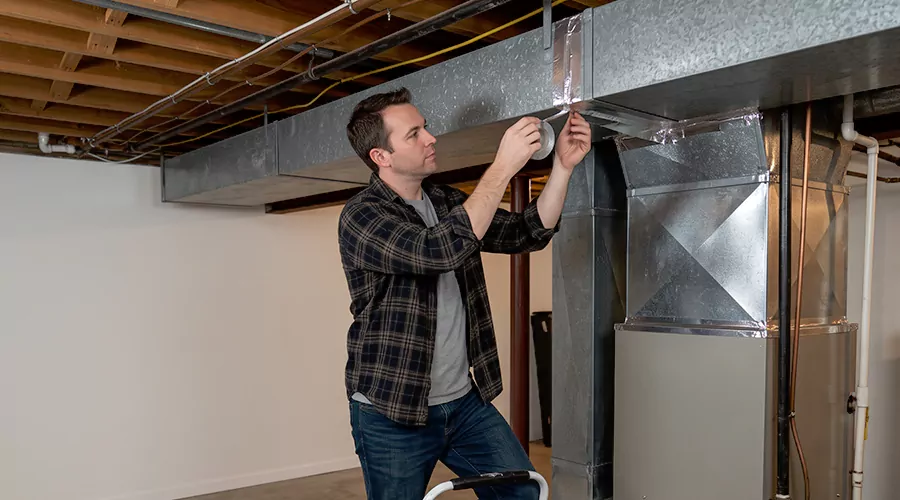
Furnace ducts need repair when damaged connections or air leaks prevent heated air from reaching rooms properly. Visible holes and disconnected sections are strong signs of damage, while weak airflow and uneven heating can suggest a problem that needs investigation. In 2026, residential ductwork repairs commonly cost $200 to $2,100 depending on the defect and location.
Furnace ducts distribute warm air from the heating equipment to rooms throughout a home. Return ducts carry indoor air back toward the furnace so it can be heated again. When either part of the system becomes damaged, airflow and room comfort may change even when the furnace itself operates normally. HVAC duct cleaning can also help address dust and debris buildup that may affect airflow, although it does not repair damaged or disconnected ducts.
The main challenge is determining whether the problem involves the ductwork or another heating component. A dirty filter can reduce airflow without any duct damage, while a malfunctioning furnace can leave rooms cold even when the ducts are intact. Understanding the warning signs helps identify when duct repair is appropriate.
What Are the Signs That Furnace Ducts Need Repair?
Furnace ducts usually need attention when physical damage or unwanted air leakage affects the distribution of heated air. Uneven room temperatures are common symptoms, but they do not confirm a duct problem by themselves. The most reliable warning signs involve visible defects or measurable airflow changes.
Uneven Heating Between Rooms
A damaged duct branch may deliver less heated air to one room than nearby areas. The affected space can remain uncomfortable even when the thermostat indicates that the furnace is operating. This sometimes occurs when a supply connection separates and warm air escapes into an attic or crawlspace.
However, temperature differences can also result from room insulation or poorly balanced airflow. A closed register damper may produce similar symptoms without any physical damage. Checking accessible openings is a useful first step before assuming a duct requires repair.
Weak Airflow From Heating Vents
Weak airflow may develop when a duct becomes crushed or disconnected. Flexible branches can also become sharply bent when their supports fail. These restrictions reduce the amount of air reaching the intended room.
A heavily loaded furnace filter can also reduce airflow throughout the system. This creates symptoms similar to duct restrictions even when all connections remain airtight. Comparing several rooms and checking the filter helps distinguish a local problem from a system-wide restriction.
Visible Air Leaks
A gap at a furnace supply duct joint allows heated air to escape before reaching its intended destination. The opening may occur where a rigid metal fitting connects to another section or where flexible ductwork attaches to a collar. Visible separation provides stronger evidence of leakage than a comfort complaint alone.
Some larger supply leaks can be detected by feeling air escaping from an accessible joint while the blower operates. However, small leaks may not create noticeable drafts. Return-side leaks also behave differently because they can draw air inward instead of releasing it.
Unusual Noises Around Duct Connections
Whistling may occur when air passes through a narrow opening in a duct joint. Rattling can develop when a loose connection or register vibrates during blower operation. These sounds may become more noticeable when the furnace starts or changes blower speed.
Not every duct noise means a repair is necessary. Metal ducts can produce occasional expansion sounds as their temperature changes during heating. Persistent rattling near a visibly damaged connection deserves more attention than an isolated sound from normal thermal movement.
Excessive Dust Near Return Connections
Damaged return ducts can draw air from unfinished spaces rather than only from the intended rooms. This may introduce dust or insulation particles into the HVAC system. The amount of contamination depends on the location and size of the opening.
A dusty return grille is not proof of duct leakage because normal household particles naturally collect near return openings. However, visible gaps around return connections or a damaged filter housing can provide additional evidence. These conditions should be evaluated before extensive cleaning is recommended.
What Causes Furnace Ductwork to Become Damaged?
Furnace ductwork becomes damaged when connections separate or the duct material deteriorates. Poor installation and physical contact can create leaks, while inadequate support may cause flexible ducts to sag or become restricted. Moisture exposure can also damage metal ducts or their insulation over time.
Loose or Poorly Sealed Connections
A forced-air heating system contains multiple duct joints and fittings. Each connection must remain mechanically secure and properly sealed. When a joint separates or old sealant deteriorates, warm air may escape through unintended openings.
Loose connections can sometimes be repaired without replacing the duct section. However, the fitting must be secured before sealant is applied. Tape alone cannot reliably support a disconnected branch.
Physical Damage to Flexible Ductwork
Flexible ducts are vulnerable to crushing when heavy objects are placed on them. Sharp bends can also restrict airflow even when the liner remains intact. These problems are common in concealed areas where ductwork may be disturbed during maintenance.
A severe tear in the inner liner creates an air leak, while a damaged outer jacket may primarily affect insulation performance. Identifying the affected layer helps determine whether repair is possible. Severely crushed or extensively torn sections often need replacement.
Rust and Corrosion
Metal furnace ducts can corrode when water repeatedly reaches their surfaces. Roof leaks and condensation may contribute to the problem in certain locations. Over time, corrosion can weaken the duct and create holes.
A small amount of surface rust does not automatically require replacement. However, extensive pitting and perforations indicate that the surrounding metal may no longer support a reliable repair. Correcting the moisture source helps prevent new corrosion after damaged material is restored.
Damaged Duct Insulation
Insulation helps keep heated air warm as it travels through attics or other unconditioned areas. When insulation becomes torn or compressed, more heat can escape through the duct walls. The furnace may continue operating normally while some rooms receive cooler supply air than expected.
Damaged insulation does not always create an air leak. The underlying duct may remain airtight even when its outer covering is torn. Repairing the insulation helps reduce heat loss without necessarily replacing the air-carrying passage.
Incorrect Duct Sizing or Installation
A duct system that is too small for the required airflow can restrict heating performance even when it contains no holes. Poorly arranged branch connections may also create excessive resistance. These problems are different from ordinary wear because they originate in the system design.
Applying sealant cannot correct an undersized duct. The necessary solution may involve changing the layout or modifying certain branches. Airflow measurements help determine whether the system has a design problem rather than a damaged connection.
What Are the Most Common Furnace Duct Problems?
Furnace duct problems affect airflow in different ways. A leak allows air to leave or enter through an unintended opening, while a restriction reduces movement through the existing passage. Insulation damage creates another problem because heat can escape through the duct wall without an actual air leak.
| Furnace Duct Problem | Common Symptom | Typical Response |
|---|---|---|
| Leaking supply duct | Weak heating in affected room | Secure and seal connection |
| Leaking return duct | Unwanted air entering system | Repair return connection |
| Disconnected branch | Very little air at one register | Reconnect and seal |
| Crushed flexible duct | Restricted airflow | Correct routing or replace section |
| Damaged insulation | Heat loss through duct walls | Restore suitable insulation |
| Rusted metal duct | Corrosion or air leakage | Repair or replace affected section |
| Loose register boot | Air escaping near wall or floor | Repair fitting and seal perimeter |
| Undersized duct branch | Persistent inadequate airflow | Evaluate duct design |
The repair should match the underlying defect. Cleaning a duct will not repair a disconnected section, while sealing a sound duct will not correct a blocked filter. Identifying the actual condition helps avoid unnecessary work.
How Can You Check Furnace Ducts for Damage?
A basic furnace duct inspection can help identify visible defects and simple airflow restrictions. The safest approach is to check accessible grilles and duct sections without opening sealed furnace components. An initial inspection should also consider the filter because a restriction near the furnace may affect airflow throughout the system.
Step 1. Compare Heating Airflow
Operate the furnace under normal conditions and compare airflow at several supply registers. Look for obvious differences between rooms and note which outlets appear unusually weak. The comparison is useful for identifying a possible branch problem, although it is not a precise airflow measurement.
If one room has weak airflow while nearby areas remain normal, the problem may be local. If every room receives weak airflow, the filter or blower may need attention. Record these observations before attempting any repair.
Step 2. Check the Furnace Filter
Turn off the heating system before inspecting the filter according to the equipment instructions. A heavily loaded filter can reduce airflow and increase resistance. Check whether the filter fits properly and whether the replacement schedule has been followed.
Use the type recommended by the furnace manufacturer. Installing an unsuitable high-resistance filter can contribute to airflow problems. Never run equipment without its required filter as a routine troubleshooting method.
Step 3. Inspect Supply Registers
Check whether the affected register is blocked by furniture or carpeting. Adjustable louvers may have been closed accidentally, reducing airflow into the room. A damaged grille can also create rattling or interfere with the intended air direction.
Remove only the ordinary register cover when it can be done safely. Look for visible debris near the opening without forcing tools into the duct. Avoid changing multiple hidden balancing dampers because their settings affect other rooms.
Step 4. Examine Accessible Ductwork
Inspect safely exposed ducts in a basement or utility area with the heating system switched off. Look for loose seams or damaged flexible sections. Check insulation for torn coverings and obvious moisture damage.
Do not cut into unfamiliar insulation or dismantle the furnace cabinet. Older materials may require special handling, and internal equipment can contain electrical components. Photograph suspected damage rather than attempting repairs beyond the accessible duct system.
Step 5. Record the Findings
Document which rooms are affected and any visible defects. Note whether the problem occurs only during heating or also during cooling if the system shares ductwork. This information helps determine whether the concern involves the air distribution system or another part of the HVAC equipment.
A clear record is particularly useful when symptoms developed after renovation work or a recent equipment replacement. The timing may indicate that an existing duct connection was disturbed. However, a physical inspection is still needed before determining the repair.
When Does a Furnace Duct Leak Require Repair?
A furnace duct leak requires repair when it allows unintended air movement through a damaged connection or opening. Supply leaks can waste heated air, while return leaks may draw unfiltered air into the system. The significance depends on the size and location of the opening.
ENERGY STAR estimates that typical residential duct systems lose approximately 20% to 30% of moving air through leaks and poorly connected sections. This figure shows why duct airtightness matters, but it is not a measurement for every home. A small leak in conditioned space may have different consequences from a large opening in an attic.
Accessible sound joints can often be sealed with HVAC-rated mastic or approved metal-backed foil tape. Mechanical fasteners are necessary when a fitting has become loose. Severely damaged duct sections may require replacement instead of surface sealing.
Leakage testing can be useful when the affected opening is concealed or when several rooms remain uncomfortable. The test measures duct airtightness under defined conditions. Additional airflow measurements help determine whether heating distribution improves after repairs.
Can Damaged Furnace Ducts Cause the Furnace to Overheat?
Severe airflow restrictions can contribute to excessive furnace temperatures because the equipment may not receive enough air to transfer heat as intended. A heavily loaded filter or blocked return path can create this condition. Crushed or severely restricted supply ducts may also contribute to inadequate airflow.
Many furnaces include safety controls that respond when internal temperatures become too high. A high-limit switch may interrupt heating while the blower continues operating. Repeated limit trips are not normal and should not be ignored.
However, overheating can occur for several reasons unrelated to damaged ductwork. Blower problems and improper equipment settings can also affect temperatures. A technician should determine the cause rather than assume that opening or closing registers will fix the issue.
Do not bypass furnace safety switches or continue operating equipment that repeatedly shuts down because of overheating. Replacing a filter may correct a simple restriction, but recurring high-temperature problems require further diagnosis.
What Is the Difference Between Furnace Ductwork and the Furnace Flue?
Furnace ducts distribute indoor air for heating, while the furnace flue removes combustion exhaust from fuel-burning equipment. These systems have different functions and safety requirements. A leak in a supply duct is a comfort or efficiency problem, while a damaged combustion vent may allow dangerous exhaust gases to enter the building.
The distinction is especially important because both systems may contain metal pipes or fittings. A furnace flue can become extremely hot during operation and may require specified clearances from combustible materials. Ordinary HVAC foil tape and duct mastic are not substitutes for approved combustion vent repairs.
| Component | Main Function | Concern When Damaged |
|---|---|---|
| Furnace supply duct | Delivers heated indoor air | Heat loss and weak room airflow |
| Furnace return duct | Carries indoor air to furnace | Unfiltered air entry and pressure changes |
| Furnace flue | Removes combustion exhaust | Carbon monoxide and combustion gas hazards |
| Combustion air intake | Supplies air for combustion on applicable equipment | Improper combustion conditions |
| Heat exchanger | Separates combustion gases from circulation air | Serious furnace safety concern if damaged |
A damaged heat exchanger is also different from a duct leak. A heat exchanger problem requires qualified furnace assessment, not patching of the surrounding ductwork. The correct component must be identified before any work begins.
If a carbon monoxide alarm sounds, leave the building immediately and follow the alarm manufacturer's emergency instructions. Contact emergency services from outside rather than attempting to locate or repair the problem yourself.
When Should Furnace Ducts Be Repaired or Replaced?
Repair is often appropriate when damage is limited to sound duct sections or connections. Replacement becomes more practical when corrosion is extensive or flexible duct material can no longer hold its intended shape. The decision should depend on structural condition and repair durability.
A disconnected fitting may be restored without replacing the entire branch. A small hole in sound metal may also support an appropriate patch. However, a permanently crushed flexible duct generally requires replacement because sealing cannot restore its airflow passage.
| Duct Condition | Recommended Approach | Reason |
|---|---|---|
| Small gap at sound metal joint | Repair and seal | Metal remains intact |
| Loose fitting | Reattach and seal | Connection can be restored |
| Minor insulation damage | Restore insulation | Air passage remains usable |
| Extensive flexible liner tear | Replace affected section | Material cannot support reliable repair |
| Severe rust and perforations | Replace affected metal section | Structural integrity is reduced |
| Undersized duct branch | Evaluate redesign | Sealing will not correct capacity |
| Repeated failures across multiple branches | Compare repair and replacement | Long-term condition may justify larger work |
Replacing one damaged furnace duct does not automatically require replacing the entire system. However, repeated problems across multiple branches may justify a broader evaluation. The replacement design should preserve appropriate airflow to the rooms served.
How Much Does Furnace Duct Repair Cost in 2026?
Furnace duct repairs commonly fall within the broader residential ductwork repair range of $200 to $2,100 in the United States during 2026. The actual expense depends on whether the work involves sealing a joint or replacing damaged material. Access through finished surfaces can increase labor and restoration costs.
| Repair Type | Estimated 2026 U.S. Cost |
|---|---|
| Damaged heating vent or register | $100 to $300 |
| Loose duct connection | $100 to $450 |
| Duct leak sealing | $375 to $700 |
| Rust or corrosion repair | $200 to $500 |
| Flexible duct repair | $100 to $800 |
| Insulated flexible duct repair | $200 to $1,200 |
| Severe duct damage or collapse | $150 to $2,000 |
| General residential duct repair | $200 to $2,100 |
These figures describe different scopes and should not automatically be added together. A leak repair may already include securing the joint and applying sealant. A larger project involving multiple branches can exceed the range shown for an individual repair.
Furnace equipment repairs are separate from duct repairs. A malfunctioning blower or failed furnace safety component requires a different diagnosis and pricing. The estimate should specify which part of the heating system is actually being repaired.
Can Furnace Duct Repairs Improve Energy Efficiency?
Repairing leaking furnace ducts can reduce unwanted heat loss and help heated air reach the intended rooms. The improvement is particularly meaningful when ductwork passes through an unconditioned attic or crawlspace. Proper insulation can also reduce heat transfer through duct walls even when the air passage is airtight.
A disconnected supply branch may release warm air into an unused space while the thermostat continues calling for heat. Reconnecting the duct can restore airflow to the affected room. However, the amount of energy saved depends on how much leakage existed and the home's operating conditions.
Return-side leakage can affect system pressure and introduce air from spaces that were not intended to supply the furnace. Proper sealing helps maintain the designed airflow path. Extensive sealing work should be followed by appropriate performance checks, particularly when fuel-burning appliances are present.
Duct repairs should not create additional airflow restrictions. A system that becomes more airtight but still has undersized or crushed branches may continue experiencing comfort problems. Both leakage and airflow need attention when evaluating performance.
When Should You Call an HVAC Professional?
Professional assessment is appropriate when a furnace repeatedly overheats or when duct damage is extensive. Concealed air leaks and suspected combustion safety problems also require qualified evaluation. These conditions go beyond routine filter changes or cleaning an accessible register.
A qualified HVAC technician can measure airflow and determine whether the duct system is restricting normal furnace operation. The technician may also inspect damaged branches and test duct leakage when necessary. Repairs should restore the intended air distribution without creating unsafe pressure conditions.
For gas or oil-burning equipment, a combustion safety test may be necessary after substantial duct sealing. Changes in building pressure can contribute to backdrafting under certain conditions. A properly completed repair should maintain safe combustion venting as well as acceptable room airflow.
If the concern involves a flue or heat exchanger rather than room-air ducts, do not attempt a household patch. Those components require separate safety procedures. Keeping their repair methods distinct is particularly important in homes with fuel-burning heating systems.
How Can You Prevent Furnace Duct Damage?
Preventing furnace duct problems involves maintaining the airflow path and protecting existing connections. Regular inspection helps identify loose fittings before an entire branch becomes disconnected. Filter maintenance also reduces restrictions that can make normal furnace operation more difficult.
Replace Furnace Filters as Recommended
Inspect the filter approximately once a month during heavy heating use. Replace disposable filters according to the manufacturer's recommendations and confirm that the replacement fits correctly. Excessive filter resistance can reduce airflow even when the ducts remain intact.
Keep Heating Registers Clear
Avoid placing furniture directly over supply openings or against return grilles. Restricted registers can change airflow through individual rooms. Keeping openings clear helps the duct system operate closer to its intended design.
Inspect Accessible Duct Connections
Check exposed joints during seasonal maintenance for damaged sealant or visible separation. Ducts may move slightly during operation, but fittings should remain securely attached. Addressing a loose connection early can prevent additional air loss.
Maintain Duct Insulation
Inspect ducts in unconditioned spaces for damaged insulation or missing coverings. Insulation reduces heat loss as warm air travels toward living areas. Moisture-damaged material should be evaluated before replacement coverings are installed.
Protect Flexible Ducts
Keep stored objects and sharp tools away from exposed flexible branches. Avoid crushing ducts during attic or crawlspace maintenance. Proper supports help maintain the shape of the air passage and reduce stress on end connections.
Schedule Heating System Maintenance
Have fuel-burning heating equipment inspected and serviced according to the manufacturer's recommendations, typically annually. The inspection should address combustion safety as well as equipment operation. Duct condition can also be evaluated when recurring airflow or comfort problems are present.
Conclusion
Furnace ducts need repair when damage interferes with normal airflow or allows heated air to escape. Loose joints may be repairable, while severely damaged sections often need replacement. Weak heating alone does not prove that the ducts are faulty, so diagnosis matters. Combustion exhaust problems require separate safety attention. This week, inspect accessible heating vents and record any rooms with persistent airflow problems.